


Approved by curator

Added: Jan 23, 2025
Last edited: Jan 24, 2025
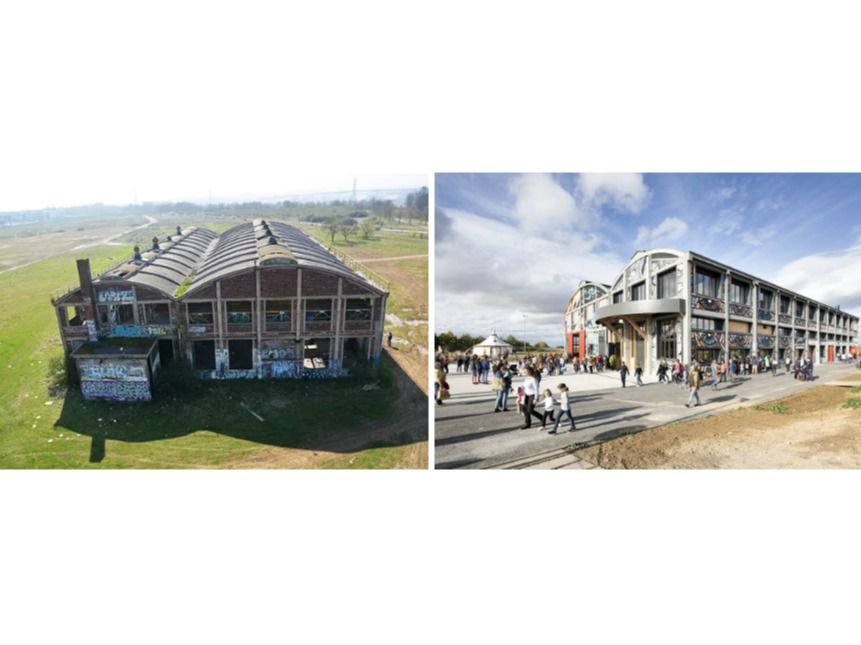
The Grande Halle de Colombelles project repurposed a former industrial site in Normandy into a vibrant community hub, serving as a space for cultural, social, and economic activities. Focusing on circular economy principles, the project preserved the existing structure and integrated reclaimed materials from local demolition sites.
The key challenges for the Grande Halle de Colombelles project were:
- Ensuring reused materials met safety, quality, and reliability standards for construction was essential to securing approval from technical controllers and insurers
- Sourcing, cataloguing, and integrating reclaimed materials while managing supply issues
- Navigating the technical and administrative requirements of implementing reuse strategies within a public project
The original structure was maintained, reducing the need for new steel and concrete, while flexible interior spaces were designed to suit diverse community activities.
A unique work package in the construction contract was dedicated to material reuse and managed by the association “Le WIP.” They oversaw the sourcing, testing, and cataloguing reclaimed materials from local demolition sites for integration into the building.
In addition, an open construction site served as a testing ground for eco-materials and encouraged public participation, building community support for the project.
Flexible specifications allowed contractors to prioritise reclaimed materials but use virgin materials when necessary to avoid delays.
Finally, the building incorporated innovative water management systems and biomass heating to reduce its operational carbon footprint and reliance on non-renewable resources.
- Through the reuse of materials and the implementation of low-impact construction techniques, the project prevented the generation of 18,901 kg of waste and reduced its GHG emissions by 25,095 kg of CO2eq.
- The Grande Halle project addressed material reuse challenges by testing and cataloguing reusable materials on an adjacent open construction site, engaging the community through cultural programs and input, and demonstrating that a dedicated reuse strategy is feasible and replicable for future projects.
- This project is unique as it incorporated circular practices into the building contract. A workstream, Lot1, was dedicated to sourcing and assessing used materials.

🏢 Smarter creation and use of products
🏢 Extending the lifespan of products and parts
🏢 Reduce
🏢 Reuse
🏢 Repurpose
community development
regional development
local partnerships