


Approved by curator

Added: Jan 28, 2025
Last edited: Jan 29, 2025
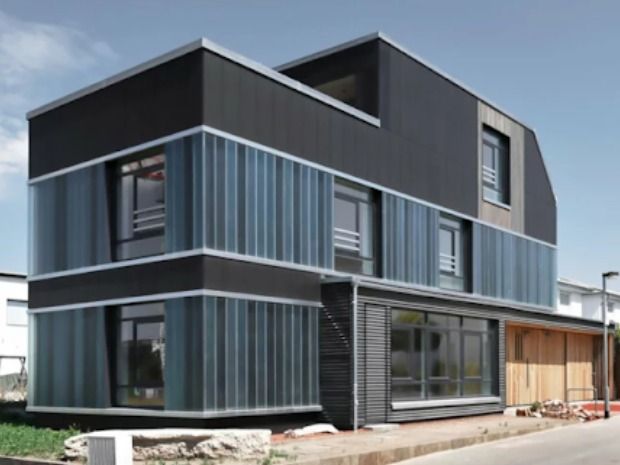
The Recycling House, completed in 2019, is a groundbreaking residential prototype in Germany that explores circular construction by maximising the use of secondary materials. Designed to reduce CO2 emissions and resource consumption in the construction sector, the project incorporated reused and recycled materials, adopted design-for-disassembly principles and tested innovative circular strategies.
The construction sector is a high-impact industry, contributing significantly to CO2 emissions and resource consumption. The Recycling House project set an ambitious goal to use 100% secondary materials to test and demonstrate the potential of circular construction.
Uncertainty about material availability also forced modifications to standard processes. For example, since Kronsberg regulations require triple-glazed windows and suitable second-hand options were unavailable, Gundlach had to adapt the reused window frames they collected to meet these requirements.
Unexpected high costs and additional time associated with sourcing, processing, and installing reused components were encountered. The lack of documentation regarding secondary materials contributed to these issues.
Overall, The project highlighted the critical need for adequate storage space and materials handling (e.g., material passports).
Gundlach was crucial in sourcing reused materials from their building stock and local demolition and renovation projects. A standout example is the building’s façade, 90% of which is cladding made with four different reused materials, all sourced locally from Gundlach’s demolition and conversion projects. The project innovatively used materials like jute cocoa bean bags for wall insulation, and the foundation was made of 42% recycled concrete.
Elements were designed for future reusability, avoiding adhesives and chemicals that would compromise material value. Exposed copper heating pipes and solid wood components were mounted for easy disassembly and reuse.
The Cityförster team conducted pioneering methods for sourcing secondary materials, adapting their design to the available resources, and finding alternatives to unavailable parts.
More than half of the interior materials were recycled, significantly reducing raw material demand. Renewable materials, like wooden elements, sequestered approximately 100 tonnes of CO2eq. Sourcing materials locally minimised transportation emissions and reduced construction waste. Besides, the house meets low-energy standards, further reducing operational energy use.
While the project cost (€6,000/m²) exceeded conventional building costs, it also showcased a potential commercial approach to sustainable circular construction from reused and recycled materials. The project highlighted the potential for cost reductions as circular practices become more standardised and supported by public infrastructure.The challenges encountered in the project emphasised the needs still existing for such projects (e.g., securing materials early, having proper documentation on reusing, establishing public material banks, etc.).

🏢 Smarter creation and use of products
🏢 Extending the lifespan of products and parts
🏢 Useful application of materials
🏢 Rethink
🏢 Reuse
🏢 Refurbish
🏢 Recycle
secondary materials
design
teamwork
material passport
material bank