


Approved by curator

Added: Feb 01, 2021
Last edited: Mar 22, 2023
TakaTaka Solutions is recycling 57 tonnes of waste daily on average in Nairobi instead of having the waste end up in landfills, and therefore polluting the soil, water, and air. They offer easy waste management services on-site for households and businesses and then collect, sort and convert the organic waste into compost, a natural soil amendment, at their composting plant, and process plastic containers and packaging into high-value plastic flakes and pellets at recycling plants.
Cities across East Africa are increasingly expanding, but there is no waste management system in place to handle the rising waste volumes. Current waste disposal practices are hazardous to both human and environmental health. In the Nairobi Metropolitan Area, 50% of the 4,000 tons of waste generated per day goes uncollected and the remaining 50% is disposed of at different landfills. Less than 10% of waste accumulated gets recycled.
Takataka Solutions offers waste management services for households and for businesses to help to separate and recycling in Kenya and develop proper separation of wastes at source. They collect and take waste to their sorting plants. Then convert the organic waste into compost, a natural soil amendment, at their composting plant, and process plastic containers and packaging into high-value plastic flakes and pellets at recycling plants. These are then used by local manufacturers to make new plastic products. For the rest of the waste collected that remains, they work with external recycling partners for other recyclables like paper, cardboard, glass, and many other materials. For households, they make sorting, treating, and storing waste simpler, and offer a range of bins and bin liners along with solutions for specialized waste such as garden and bulky waste. For businesses, they offer in-depth waste analysis, support setting up take-back systems and Extended Producer Responsibility requirements, as well as consulting about environmental positioning for their business models.
Takataka Solutions collects 60 tonnes of waste from Nairobi daily. The company recycles plastic containers and packaging, composts food waste, and collaborates with recycling partners to recycle other products, resulting in recycling 95% of the waste they collect. In addition, they have more than 350 full-time staff and operate multiple sites in the Nairobi Metropolitan Area:
• Three sorting sites
• One composting plant
• Two plastic recycling plants (containers and flexibles)
• One incinerator
• Three buy-back centers
• Free waste management services for low-income schools
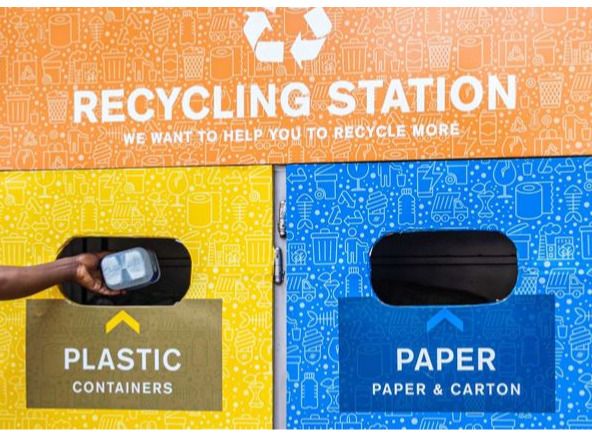
Photo on TakaTaka solutions website