


Approved by curator

Added: Sep 03, 2021
Last edited: Sep 29, 2021
Established in 2015, the SustainaWOOL™ scheme is the world's largest sustainability scheme in the wool industry. Through collaboration between credible wool processors, specialist wool growers and buyers, this scheme was established to help communicate the efforts of wool producers to their consumers about their sustainable efforts and traceable practices.
Transparency in the supply chain of the fashion industry has been a key issue for a considerable amount of time, where brands are unable to trace back to the start of the supply chain for their products. The beginning of the supply chain is the most problematic stage where visibility is low and often social injustices and environmental abuses go unnoticed.
According to the Fashion Transparency Index 2021, only 11% of major brands disclose a small selection of their raw material suppliers and only 7% mention the name of a specific farm where the raw material is produced.
For a raw material as precious as wool, and with an ever increasing demand in the fashion industry, consumers are more aware and more demanding about evidence for the products they buy.
The SustainaWOOL™ scheme started in 2015 and since then about 950 farms have been recognized to use this scheme to improve practices, making this the largest sustainability scheme in the wool industry. It has set a benchmark for sustainability standards within the production systems of wool in Australia providing traceability and transparency throughout the supply chain; starting from the farm all the way to the consumers.
The SustainaWOOL™ scheme is based on 3 main pillars of wool production:
1. Sheep health and wellbeing :
The scheme provides shearers with a definition of standards for the welfare of the sheep ensuring they are not mulesed or mulesed with pain relief.
2.Farm Management Practices and Facilities
SustainaWOOL™ also has a definition of minimum standards for farming practices including standards for health and safety standards for facilities for their sheep
3.Clip Preparation Requirements
They also have set out requirements for wool preparation for shearers in compliant with the AWEX Standard and validate that these standards are communicated to all those involved in the supply chain
This scheme also provides consumers with added traceability coexisting with systems such as tracing back to the bale of a producer, the registered farm brand, classer’s specification being a declaration of information about the wool being sold and regulations involved in testing and sampling of the wool for sale. Suppliers are also able to nominate their ability to trace individual animals on their properties complying to the requirement to certify that all sheep on the property are identified with a unique form of identification and are monitored on routine while documenting their location on the farm.
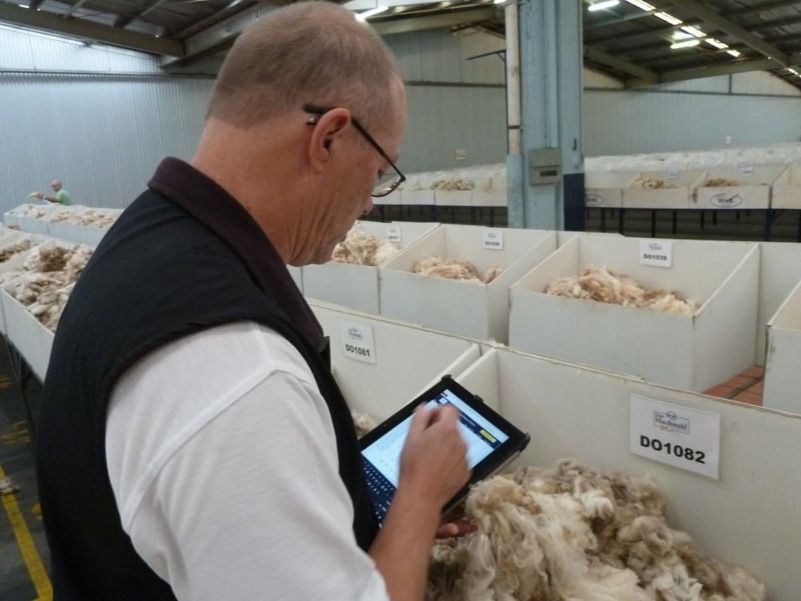
Through an electronic Bale-ID, provided by a unique RFID (Radio-frequency identification) & Barcode on each wool package, enhances the wool’s potential to be traced back to the farm.
This feature enables the traceability of the wool bale as it progresses through the supply chain from the farms to the first processor.
This authorization requires a National Wool Declaration (NWD) to be completed for each bale of wool to be sold, verifying full accountability and transparency under the AWEX NWD Scheme for Mulesing Status and Dark and Medulated Fibre.
Sustaina Wool has a classification of 2 types of suppliers; namely blue and green. The SustainaWOOL Green suppliers are identified as those who do not mules the sheep and SustainaWOOL Blue suppliers are those who continue to mules the sheep but are using registered anaesthetic products for the pain relief of the sheep.
Although sustainability and the welfare of animals is not a new topic for Australian farmers, the SustainaWOOL™ integrity scheme sets a new benchmark for meeting sustainability standards in Australia, demonstrating a deep level of care and a sense of responsibility towards the management of sheep. Since the wool can be traced from the individual grower farm to the wool growers, processors, brands, retailers to the consumers, consumers have greater trust in the wool industry in Australia.
Design for recycling
Design for physical durability
Design for product attachment, emotional durability
Guidance, dialogue with industry stakeholders
sheep
Australia
Traceability
transparency
supply chain transparency
sustainable wool
wool